MMSU Distributes Starter Forages to Establish Community-Based Demonstration Plots
Written by Administrator on 28 September 2026
by Mercy Ramos-Gaño
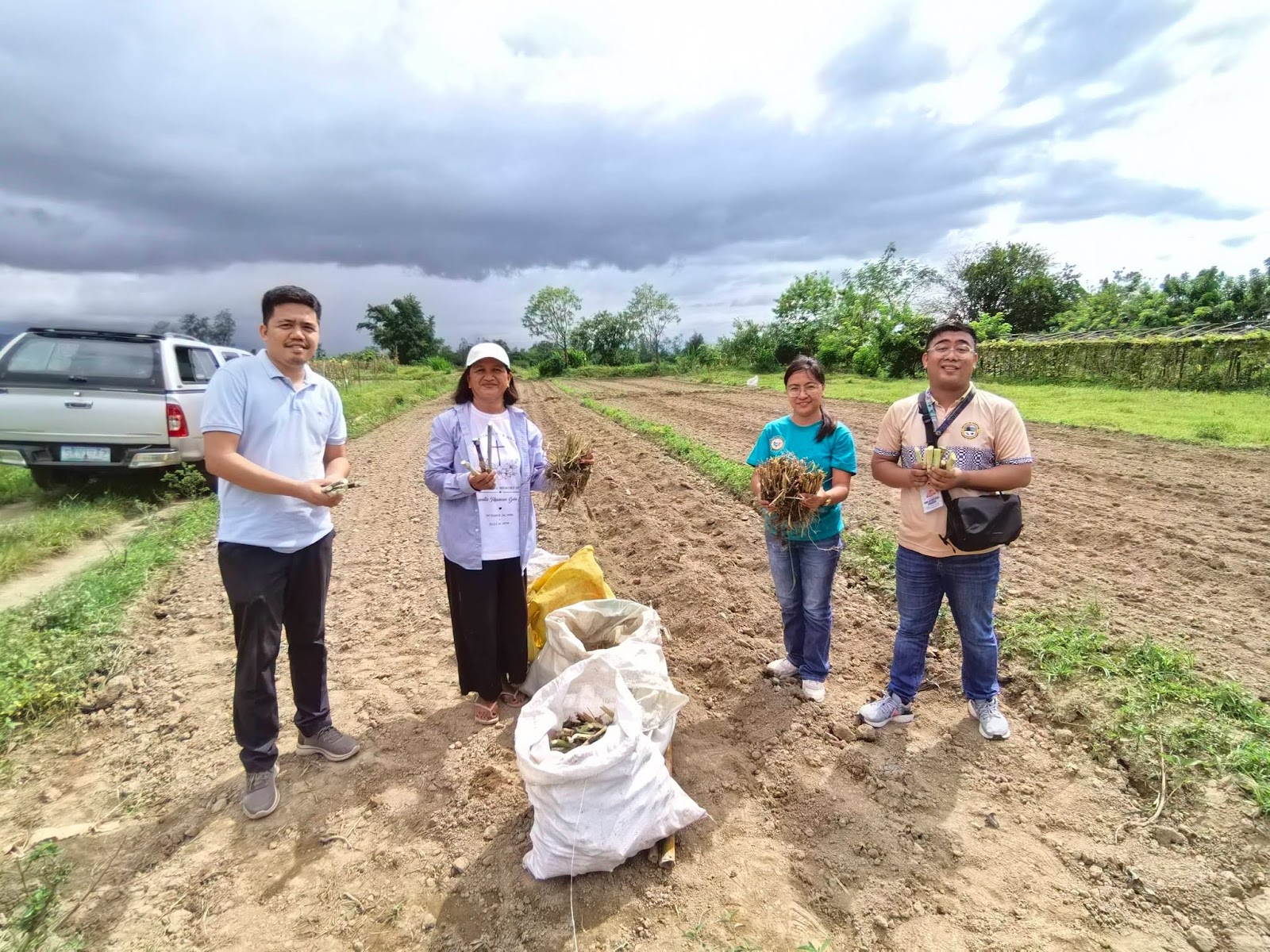
The Mariano Marcos State University (MMSU), through its College of Agriculture, Food and Sustainable Development (CAFSD) and the Extension Directorate, has officially started distributing free starter planting materials to local ruminant keepers who signified interest in establishing high-yielding forage plots.
The distribution is part of the university project, "Establishment of Improved Forage and Pasture Demonstration Plots to Support Continuing Education of Ruminant Keepers," led by Assistant Professor Sean R Vidad of MMSU-CAFSD.
The first batch of beneficiaries includes Ms. Iluminada Guerrero Badua of Brgy. Pacifico, Marcos, and Ms. Edz Antonio of Brgy. Ab-abut, Piddig. Both pioneer recipients are graduates of the university's School-on-the-Air (SOA) program, endorsed by their LGU, and successfully met the selection criteria to serve as lead farmer-partners. In this role, they will establish community-based, farmer-managed demonstration plots designed to influence fellow ruminant keepers in their localities through farmer-to-farmer extension and future sharing of planting materials. Among the distributed species were climate-resilient forage grass varieties, including dwarf napier, pakchong, setaria, guinea, and mulato.
This initiative aims to directly address the critical feed shortages local cattle and goat raisers face during the prolonged dry spells of Ilocos Norte. Integrating these high-quality, cultivated forage grasses into local farms provides vital support to livestock growers by providing a continuous feed supply throughout the lean months, as fast-growing forages produce significantly higher amounts of fresh green feed per unit area compared to native weeds or dry rice straw. Furthermore, these improved grass varieties deliver superior crude protein and digestible energy, directly boosting animal productivity through faster weight gains, higher milk yields, and better overall reproductive health. Their exceptional climate resilience—demonstrated by species like Setaria and Mulato that tolerate both extreme drought and temporary waterlogging—helps smallholder farmers build more adaptive, sustainable agricultural livelihoods.
The distributed planting materials were taken from the initial collection of thirteen improved forage species established at the university’s Ruminant Teaching and Demonstration Facility in Sitio Nagbacsan, Brgy. Tabug, Batac City. The site features seven high-yielding grass varieties (Florida, Red, Sweet, and Pakchong Napier, Guinea Grass, Mulato II Hybrid, Setaria, Ruzi, Forage Sorghum, and Teosinte or Maramais), four leguminous species (Desmanthus, Renzonii, Alfalfa, and Pigeon Pea), and two multipurpose trees (Ipil-ipil and Madre de Agua).
To complement the distribution, the project will also conduct training and provide continuous technical assistance to ensure proper field establishment, crop management, and utilization. While numerous farmers' groups across the province have signified their interest in receiving planting materials, current production from the initial collection plots remains limited. Consequently, the project will conduct distributions on a staggered, series-by-series basis as new planting materials are harvested, and other community members will be notified accordingly as to when their starter sets will be provided until everyone who expressed interest is fully served.
Other Latest News
-
Newsbrief | MMSU Extension Directorate Conducts Needs Assessment in Brgy. San Marcelino, Dingras
SEP 30, 2026
Following the training on Indigenous and Locally Available Feed Resources (ILAFR)—aimed at reducing production costs and promoting sustainable feed sources for local swine growers—the Extension Directorate conducted a needs assessment in Barangay San Marcelino, Dingras, Ilocos Norte on S... [view more]
-
Newsbrief | MMSU Advances Urban Microgreens Project with Batac Community Orientation
SEP 25, 2026
The Mariano Marcos State University (MMSU) College of Agriculture, Food and Sustainable Development and the MMSU Extension Directorate, in partnership with the City Government of Batac, conducted a community orientation on microgreens production on September 22, 2026, at the Barangay Hall of Quiling... [view more]
-
Newsbrief | Site Validations Prepare Batac Elementary Schools for Bio-Intensive Gardening
OCT 01, 2026
Co-led by Mariano Marcos State University (MMSU) and the Rotary Club of Laoag Sunshine, the Gender-Responsive and Culture-based Bio-intensive Gardening Program reached its next key phase as technical teams conducted site validation visits across four partner elementary schools on September 10 and 18... [view more]
-
Green Growth: Brgy. Aglipay, Pinili Eyes Leadership in Ilocos Norte Bamboo Industry
SEP 22, 2026
by Mercy Ramos-GañoTo boost local livelihoods and environmental sustainability, Barangay Aglipay in Pinili, Ilocos Norte is positioning itself to become a center for bamboo production and processing.“Nagmulakami ti nayon a kawayan para diay Bambusetum Project-tayo near the bridge. Gapo... [view more]
-
Students Prepare for 9th Annual Rice Paddy Art Planting at MMSU
SEP 15, 2026
Following the reveal of the "MMSU Going ASEAN" official design last August 24, 50 Bachelor of Science in Agriculture students gathered today, September 15, for a technical orientation to prepare for the hands-on field establishment of the university's 9th annual Rice Paddy Art. Jointl... [view more]